
Thai Massage Benefits Origins Techniques and What to Expect

Thai massage can surprise people the first time they try it. Instead of lying still while a therapist glides oil over the skin, the body is moved, stretched, compressed, and gently rocked. Some people describe it as assisted yoga. Others think of it as bodywork that wakes up stiff joints and quiets a busy mind.
At its best, Thai massage blends touch, movement, breath, and mindful pacing. It can feel grounding, energizing, and deeply restorative, especially for people who spend long hours sitting, exercising hard, or carrying stress in the neck, shoulders, hips, and back.
This guide explores the origins of Thai massage, the techniques that make it unique, how it compares with other massage styles, and what to expect before booking a session.

Where Thai massage comes from
Thai massage, often called traditional Thai massage or Thai yoga massage, has roots in Thailand’s healing traditions. It developed through a blend of influences, including Thai folk medicine, Buddhist practice, Ayurveda from India, and elements of Chinese medicine.
Its traditional name, Nuad Thai, means Thai massage or Thai bodywork. In many settings, it has been practiced as part of a broader approach to well-being that includes herbal remedies, meditation, movement, and attention to daily habits.
A key idea in Thai massage is the concept of energy pathways, often called sen lines. Practitioners work along these lines using pressure, stretching, and rhythmic movement. While the sen line system does not map directly onto Western anatomy, many of the techniques affect familiar physical structures, such as muscles, fascia, joints, tendons, and nervous system responses.
Thai massage also has a strong mindful quality. Traditionally, the practitioner works at a steady pace, often using breath and rhythm to guide each movement. The session is not meant to feel rushed. It is meant to encourage release without forcing the body.
What makes Thai massage techniques unique
Thai massage stands apart because it uses the practitioner’s whole body, not just their hands. A trained practitioner may use palms, thumbs, forearms, elbows, knees, or feet, depending on the technique and the client’s comfort level.
The work also happens through the client’s clothing. Instead of oil or lotion, Thai massage usually uses loose, comfortable clothing that allows free movement.
Assisted stretching is central to the practice
The most recognizable part of Thai massage is assisted stretching. The practitioner may guide the legs, hips, arms, spine, or shoulders through slow stretches. Some positions look similar to yoga poses, but the client stays passive while the practitioner supports the movement.
Common examples include:
Gentle spinal twists while lying on the back or side
Hip-opening movements for the groin, glutes, and outer hips
Hamstring and calf stretches
Shoulder and chest opening positions
Supported forward folds or side bends
These stretches can help people feel more open and mobile, especially when tension builds from sitting, driving, lifting, or repetitive exercise.
Compression creates deep pressure without rushing
Thai massage often uses compression, which means steady pressure applied to muscles and soft tissue. This may feel like a firm press, a rhythmic rocking motion, or a slow lean into an area.
Unlike some deep tissue massage, Thai massage does not rely on sliding strokes across oiled skin. The pressure is more direct and often broader. This can make it feel deep without feeling sharp, though pressure should always stay within a tolerable range.
Movement helps the body relax
Thai massage is not static. The practitioner may gently rock the body, move limbs in circles, or shift from one position to another like a slow sequence.
This movement can help the nervous system settle. It may also help people who find it hard to relax during a still massage. The rhythm gives the mind something simple to follow.

How Thai massage differs from other massage styles
Many massage styles aim to reduce tension and support relaxation, but they reach that goal in different ways. Thai massage differs most in its clothing, setup, pacing, and use of movement.
Massage style | What it often feels like | How it differs from Thai massage |
Swedish massage | Flowing, gentle to moderate pressure with oil | Thai massage uses clothing, no oil in many sessions, and more stretching |
Deep tissue massage | Slow, focused pressure on tight areas | Thai massage may feel deep, but uses compression and body positioning rather than mostly gliding strokes |
Sports massage | Targeted work for activity, recovery, or mobility | Thai massage can support mobility too, but usually feels more rhythmic and whole-body |
Shiatsu | Pressure along meridian-style pathways, often clothed | Thai massage includes more assisted stretching and larger body movements |
Reflexology | Focused pressure on feet, hands, or ears | Thai massage usually works the full body and includes joint movement |
Thai massage can be relaxing, but it is often more active than a spa-style massage. The client does not “work” in the way they would during exercise, yet the body moves through a wide range of positions.
That makes it appealing for people who want both calm and mobility support in the same session.
Physical benefits of Thai massage
Thai massage is not a cure-all, and it should not replace medical care when pain, injury, or health conditions need evaluation. This article is for informational purposes only. For ongoing symptoms, pregnancy, recent surgery, or a medical condition, ask a qualified health professional before booking bodywork.
With that said, many people seek Thai massage for practical physical benefits.
It may help improve flexibility and range of motion
The assisted stretching in Thai massage can help muscles and joints move through a comfortable range. Over time, regular sessions may support better mobility, especially when combined with daily movement, hydration, and balanced strength work.
For people with tight hips, hamstrings, calves, shoulders, or backs, Thai massage may feel like a reset. The practitioner can help the body explore movement in a supported way, without the strain of trying to stretch alone.
It can ease general muscle tension
Compression, pressure, and movement may help reduce the feeling of tightness in overworked muscles. This can be helpful for people who sit at a computer, stand for long shifts, train regularly, or carry tension in predictable areas.
Common focus areas include:
Neck and shoulders
Upper and lower back
Hips and glutes
Calves and feet
Forearms and hands
The best sessions are not about tolerating pain. Effective Thai massage should feel firm, focused, and responsive. If a stretch or pressure feels too intense, a good practitioner adjusts.
It may support posture awareness
Thai massage does not “fix” posture in one session, but it can help people notice where they hold tension. For example, someone may realize that tight hip flexors affect how their lower back feels, or that a stiff chest and shoulders contribute to neck discomfort.
That awareness can support better self-care between sessions.
It can complement active recovery
For people who exercise, Thai massage may help with recovery by encouraging movement, circulation, and relaxation. It can be especially useful on rest days or during lighter training periods.
After an intense workout, a gentler session may be better than strong pressure. The goal should be recovery, not more stress on already tired tissue.
Mental and emotional benefits
Thai massage affects more than muscles. The slow pace, steady pressure, and mindful contact can have a calming effect on the nervous system.
Stress relief often comes from rhythm and stillness
Stress tends to show up in the body as shallow breathing, clenched muscles, restless thoughts, or a feeling of being “on.” Thai massage gives the body a different signal. The rhythm says slow down. The stretching says release. The steady pressure says settle.
Many people leave a session feeling lighter, calmer, or more present. Some feel energized rather than sleepy, which is one reason Thai massage has a loyal following among people who want relaxation without feeling groggy.
It can encourage better breathing
During a session, the practitioner may coordinate movements with the client’s breath. Even without formal breath instruction, the body often begins to breathe more deeply as tension decreases.
This matters because breathing and muscle tension are closely linked. When breathing softens, the jaw, shoulders, ribs, and abdomen may soften too.
It offers a screen-free reset
A Thai massage session creates a rare pocket of time with no phone, no multitasking, and no demands. That alone can support mental clarity.
The combination of sensory focus and body awareness can feel meditative, even for people who do not enjoy seated meditation. Instead of trying to empty the mind, the experience gently brings attention back to the body.
What to expect during a Thai massage session
Most Thai massage sessions begin with a brief conversation. The practitioner may ask about injuries, pain areas, health conditions, movement limits, and pressure preferences. This is the time to mention anything relevant, even if it seems minor.
You will usually stay clothed
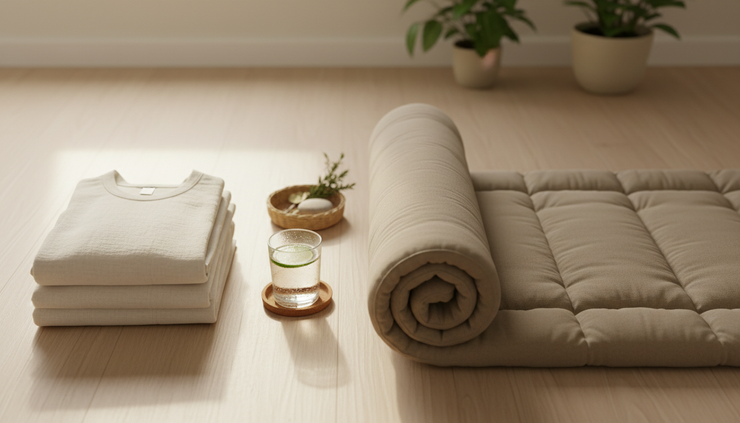
Wear loose, flexible clothing. Think soft joggers, leggings, a T-shirt, or a breathable long-sleeve top. Avoid stiff jeans, belts, bulky sweaters, or anything that limits movement.
Some studios provide clothing, but not all do. If unsure, ask when booking.
The session often takes place on a floor mat
Traditional Thai massage usually happens on a firm padded mat on the floor. This gives the practitioner more room to move and use body weight safely. Some practitioners adapt Thai techniques to a massage table, especially for clients who have trouble getting up and down from the floor.
Pressure should be adjustable
Thai massage can be gentle, moderate, or strong. It should never feel like something you must endure. Good communication improves the session.
Useful phrases include:
“That pressure feels good.”
“Please use less pressure.”
“That stretch feels too strong.”
“Can we slow down?”
“My knee does not like that position.”
A qualified practitioner will welcome clear feedback.
You may feel both relaxed and awake afterward
Some people feel calm and sleepy after Thai massage. Others feel open, alert, and refreshed. Mild soreness can happen, especially after deeper pressure or intense stretching, but strong or lasting pain is not the goal.
After the session, drink water, move gently, and give the body time to absorb the work. A walk, light stretching, or a quiet evening can help extend the benefits.
How to find a qualified Thai massage practitioner
Skill matters. Thai massage involves leverage, joint movement, and body weight, so training and judgment are essential.
Start by looking for someone with specific Thai massage education, not just a general massage background. In the United States, massage licensing rules vary by state, but legal practice usually requires a license or certification that meets local requirements.
When comparing practitioners, look for:
Relevant training
Ask where they studied Thai massage and how many hours of hands-on training they completed.
Valid licensing where required
Check that they meet state or local rules for massage practice.
Clear intake process
A professional should ask about health history, injuries, surgeries, pregnancy, medications that affect bruising, and comfort with stretching.
Respect for boundaries
Draping may not apply the same way because clients are clothed, but consent still matters. A practitioner should explain positions and adjust when asked.
Experience with your needs
If you have chronic pain, limited mobility, athletic goals, or a specific concern, ask whether they have worked with similar clients.
Clean, calm treatment space
The space should feel hygienic, organized, and comfortable.
Reviews can help, but they do not tell the whole story. A short phone call or message exchange can reveal a lot about professionalism. Notice whether the practitioner answers questions clearly and avoids unrealistic promises.
Be cautious if anyone claims Thai massage can cure diseases, fix serious injuries in one session, or replace medical treatment. Ethical practitioners understand the value of bodywork without overstating it.
Who should use caution before trying Thai massage
Thai massage can be adapted for many bodies, but some situations call for extra care. Speak with a healthcare professional and tell the practitioner in advance if you have:
Recent surgery or injury
Osteoporosis or fragile bones
Blood clot risk or a history of clotting issues
Uncontrolled high blood pressure
Severe varicose veins
Advanced joint disease
Pregnancy
Nerve symptoms such as numbness, tingling, or weakness
Acute inflammation, infection, or fever
A skilled practitioner can often modify pressure, skip certain stretches, or use gentler techniques. The best session is the one that fits the person on the mat, not a fixed routine.
Making the most of your session
A few small choices can improve the experience.
Avoid a heavy meal right before the appointment. Arrive a little early so you do not rush in stressed. Share your goals, such as relaxation, hip mobility, shoulder tension, or general recovery. During the session, keep communication simple and honest.
Afterward, do not schedule intense exercise immediately if the session was deep. Give the body time to integrate the stretching and pressure. Notice how you feel the next day, not just the moment you stand up.
If the practitioner’s style fits well, regular sessions may become part of a broader self-care routine. That routine might also include walking, strength training, stretching, sleep, and stress management. Thai massage works best as support for a healthy life, not a substitute for one.
The takeaway
Thai massage brings together ancient tradition and practical bodywork. Its mix of assisted stretching, compression, rocking, and mindful rhythm makes it different from many other massage styles. For people seeking stress relief, improved flexibility, reduced muscle tension, and a stronger sense of body awareness, it can be a powerful addition to a wellness routine.
Choose a trained practitioner, speak up about comfort and boundaries, and approach the session with curiosity. The right Thai massage does not force the body to relax. It gives the body enough support, space, and time to let go.
Comments